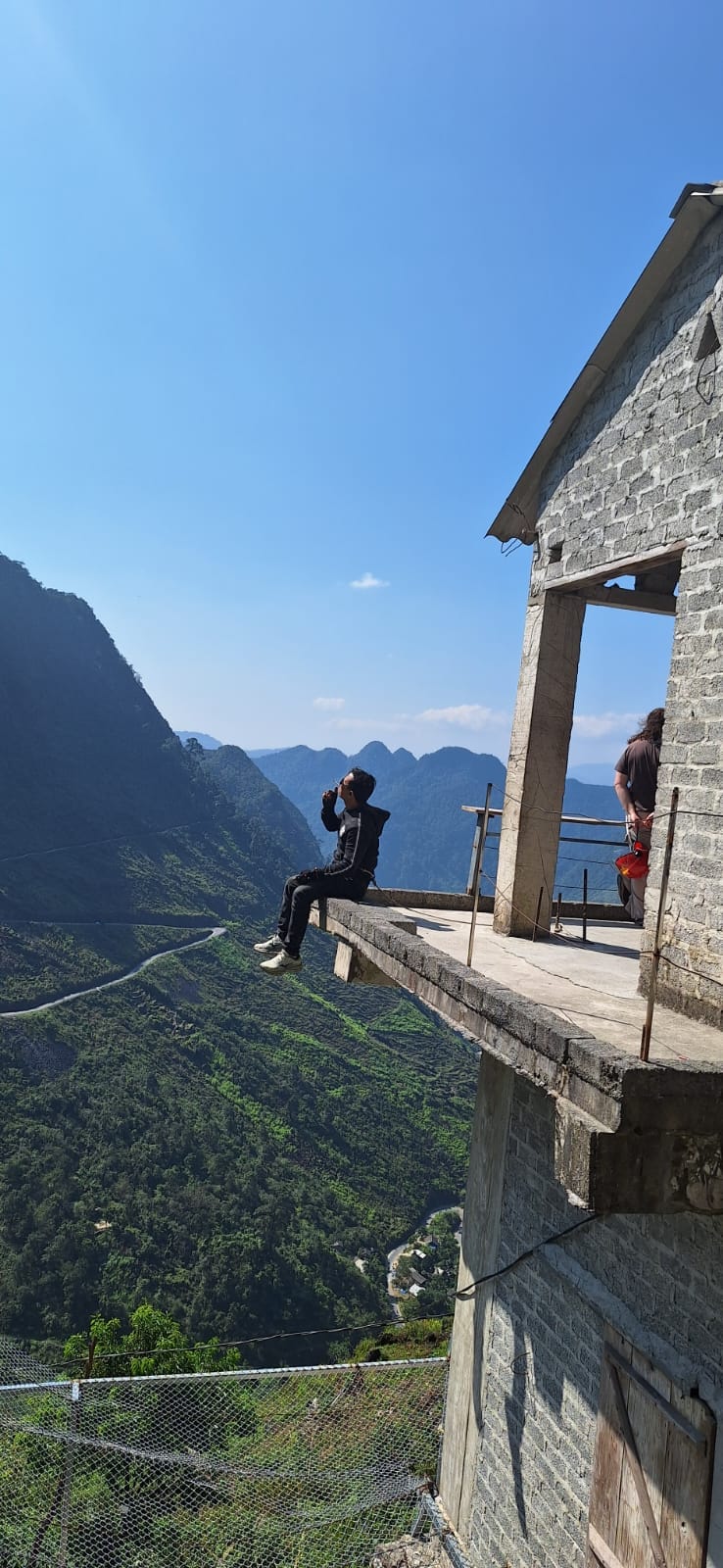
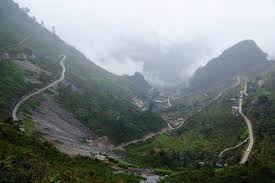
Can Ty slope
Cán Tỷ Sloper – The Gateway to the High Mountains of Hà Giang ⛰️
Cán Tỷ is a locality in Quản Bạ District, Hà Giang, situated along the vital route connecting Quản Bạ to Yên Minh. To better understand the meaning behind the name “Cán Tỷ,” let’s explore its linguistic roots in the H’Mông language, which is widely spoken in this region.
🔍 Decoding the Name “Cán Tỷ” in H’Mông
🔸 “Cán” 🏡: In the H’Mông language, this word can mean “gate” or “entrance,” symbolizing Cán Tỷ’s position as a gateway to the Đồng Văn Karst Plateau.
🔹 “Tỷ” 🏔️: This term may derive from a word meaning “high peak,” “elevated land,” or a reference to rugged, mountainous terrain—perfectly describing the region’s landscape.
👉 When combined, “Cán Tỷ” can be understood as:
✅ “The gateway to the highlands” 🚪🏞️
✅ “The entrance to a rugged land” 🌄



📜 Historical Significance & Strategic Location
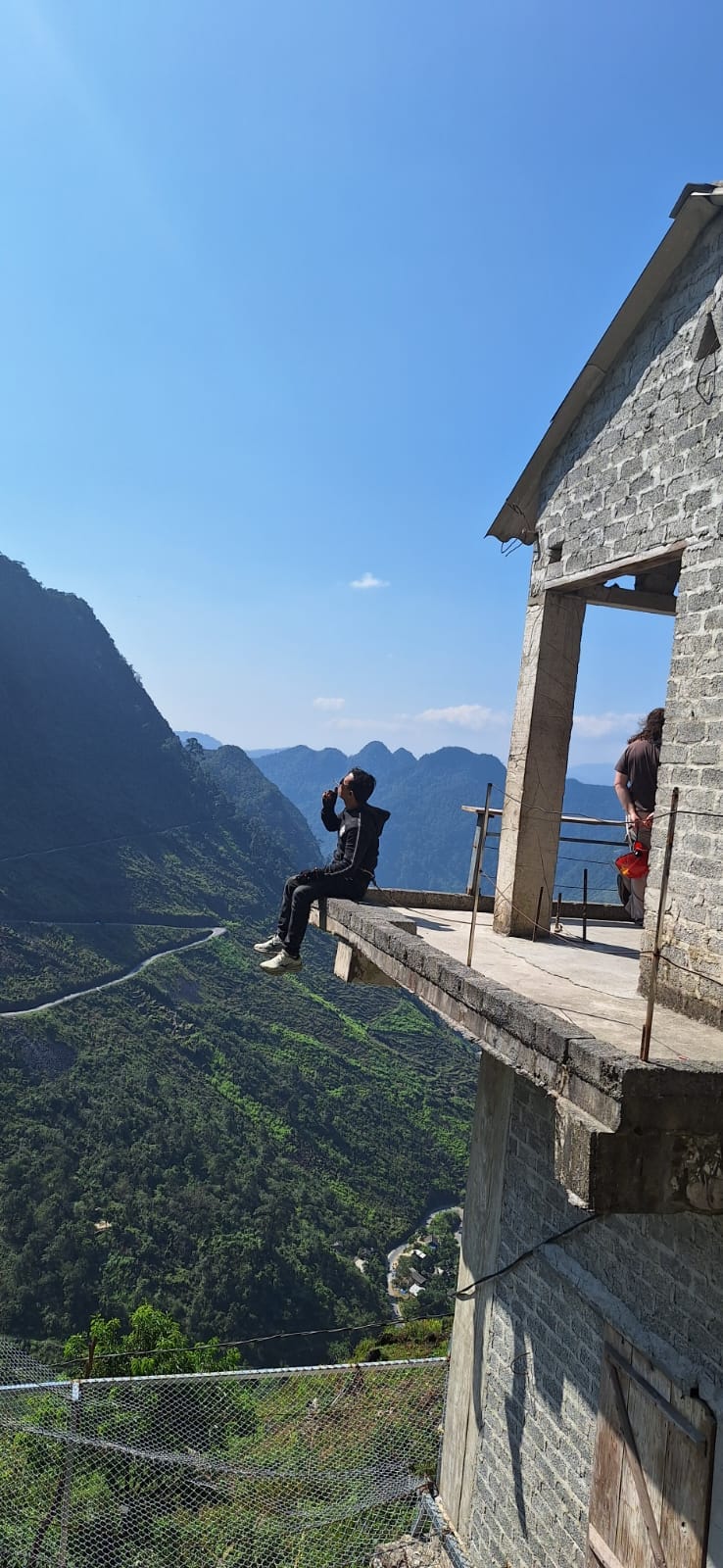
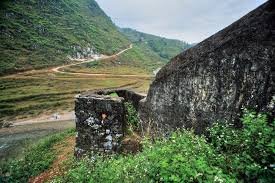
Cán Tỷ is not only geographically important but also holds historical significance. During the French colonial period, it was a key location where the French built defensive structures 🏰. Additionally, Cán Tỷ served as a crucial intersection of ancient trade and military routes 🛤️, playing an essential role in the exploration of the Đồng Văn Karst Plateau.
📖 Alternative Theories on the Name “Cán Tỷ”
Some believe that the name may have originated from an ancient ethnic group that once inhabited the area or could be linked to a significant historical event.
📜 The Legend Of Cán Tỷ slope – Giàng A Cán and the Battle Against the Ferocious Tigers 🐅🔥
🌿 A Rugged, Fierce, Yet Majestic Land 🏔️
Long ago, the mountainous area between Sủa Cán Tỷ and Sảng Cán Tỷ was an incredibly perilous place. The only path leading through it was steep, towering, and filled with sharp karst rocks 🪨—one misstep could send a traveler plummeting into the abyss.
Worse still, the area was dominated by a ferocious pack of tigers, making it a terrifying nightmare for the villagers. 🐅🐅🐅 These massive beasts, with eyes glowing like embers 🔥, lurked among the rocky cliffs, ready to pounce on anyone daring to pass through. Cattle, pigs, chickens, and even people fell prey to their relentless hunger.
The villagers lived in constant fear 😨, too afraid to step outside at night. Trade and travel came to a standstill, and life grew increasingly difficult. Year after year, their suffering continued…
👶 The Birth of Giàng A Cán – The Village’s Beacon of Hope 🌟
In the midst of this dark time, a child was born. His parents named him Giàng A Cán, hoping that he would become a gateway to a new path for the villagers. In the H’Mông language, “Cãn” means “gate”, symbolizing leadership, protection, and exploration.
From a young age, Giàng A Cán was strong, courageous, and exceptionally intelligent 💪. He learned the ways of hunting, observing nature, and most importantly, he carried the deep sorrow of his people in his heart. Cán swore that one day, he would slay the tigers and free the path from the grip of fear.
🔥 The Hero’s Battle Against the Ferocious Tigers 🏹🐅
When Giàng A Cán came of age, he gathered the strongest men in the village and devised a plan to confront the tigers.
🛠️ They dug traps, embedding sharp stakes like wolf fangs ⚔️.
🏹 They crafted poison-tipped arrows, as deadly as eagle talons 🦅.
🔥 They used cattle as bait, luring the tigers out of their lair…
On a bright moonlit night, as the roars of tigers shook the mountains, the battle began.
The leader of the pack, as massive as a bull, lunged toward its prey. But the moment it landed, it fell straight into the trap! 🕳️💥 Giàng A Cán seized the opportunity, charging forward with his long spear in hand! With a mighty thrust, he pierced the beast’s heart! 💀🐅
The remaining tigers panicked, trying to flee, but it was too late. The villagers attacked in unison, wiping out the entire pack and restoring peace to the land. From that day on, no tiger dared set foot in the area again! 🚷🐅


⛰️ Dốc Cán Tỷ – A Symbol of Courage and Exploration 🌅
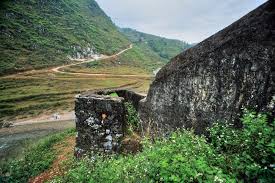
• After this legendary victory, the villagers decided to name the treacherous slope Dốc Cán Tỷ:
✅ “Cán” – The name of the hero who paved the way for his people 💪. In the H’Mông language, it can also mean “gate” or “entrance,” symbolizing Cán Tỷ as a gateway to the Đồng Văn Karst Plateau.
✅ “Tỷ” – The peak, a sacred symbol of this land 🏔️.
From that moment on, Dốc Cán Tỷ was no longer a place of fear but a gateway to a new life—a land of thriving trade, breathtaking landscapes, and a constant reminder of the heroic tale of Giàng A Cán.
🌟 Today, anyone who conquers Dốc Cán Tỷ, if they listen carefully, can still hear the wind howling through the mountain crevices—echoing the legendary battle of the hero from long ago… 🌬️🏹🔥
Can Ty Gate and the Story of Suppressing Bandits in Dong Van: A Historical Imprint on the Frontier
📍 Can Ty Gate – a location intertwined with historical stories and painful memories of Vietnam’s northernmost region. It was one of the key military outposts built by the French in the early 20th century to control the strategic route connecting Quan Ba and Yen Minh through the Miện River Gorge. The Can Ty Fortress, with its 60-meter-long, 3-meter-high walls and fortified bunkers, once served as a garrison for French and local soldiers.
Can Ty Fortress – A Remarkable Historical Relic
🛡️ Defense system: The Can Ty Fortress was solidly constructed with high walls and a triangular stronghold. Its advantageous geographical position allowed for “one to hold off thousands.”
⛰️ Integration with nature: The fortress blends seamlessly with the majestic natural landscape, creating a unique highlight on the Dong Van Karst Plateau.
The Story of Suppressing Bandits in Dong Van: A Tragic Memory
In the late 1950s, Dong Van became the epicenter of violent rebellions led by bandit groups.
🔴 The “Autonomous Five Villages” Conspiracy: In May 1959, a bandit group led by Vang Chung Dinh held a secret meeting and blocked “Can Ty Gate” in an attempt to separate five northern communes of Dong Van into an autonomous area.
🔪 Bandits killing innocents: Those who refused to join the bandits were brutally executed, with horrifying cases of “rendering human fat” to intimidate government officials and villagers.
💣 Fierce confrontations: Police and Vietnamese militia faced bandit groups armed with everything from spears to advanced firearms. The bandits exploited the rugged terrain to challenge government forces.
📉 Heartbreaking statistics:
- 42 officials sacrificed their lives.
- Dozens of civilians were killed.
- State-run stores were burned, and goods were looted.
Artifacts in Ha Giang Museum
🏺 Historical artifacts: The Ha Giang Museum currently exhibits jars of human fat and bandit weapons, such as the scythe used by the infamous bandit leader Trang Seo Khun, who reportedly killed dozens of people. These artifacts serve as somber reminders of a tragic but resilient era in Vietnam’s history.
📜 Historical significance: The story of suppressing bandits not only reflects the harshness of that time but also honors the indomitable spirit of Ha Giang’s people in defending their homeland.
Can Ty Gate Today
🌸 An intriguing destination: Alongside other attractions such as stone forests, the Miện River Gorge, and the Can Ty Brocade Cooperative of the Hmong people, this area has become a key stop within the UNESCO Global Geopark.
🌿 Eco-tourism: This destination offers a harmonious blend of breathtaking natural landscapes and rich local culture, drawing visitors from both Vietnam and abroad.
🌟 Conclusion: The Can Ty Fortress and the stories of suppressing bandits in Dong Van are an integral part of Ha Giang’s historical narrative. Visiting this site is not only about admiring its majestic natural beauty but also about understanding and appreciating a heroic and tragic chapter in the nation’s history.
Time Travel’s Ha Giang Discovery Tours
Services

Big Loop Tour
Join the Big Loop Tour Ha Giang – Cao Bang – Ba Be to explore majestic mountains, Ban Gioc Waterfall, Ba Be Lake, and the unique culture of Northeast Vietnam. Book your tour now!

Ha Giang Group Tour
Join the Ha Giang Group Tour for an incredible journey through majestic mountain passes, traditional villages, and stunning landscapes. Perfect for friends, families, or solo travelers!

Ha Giang Private Tour
Experience Ha Giang your way with our Private Tour! Explore breathtaking landscapes, mountain passes, and local culture on a fully customized itinerary. Book now for a unique adventure!
Contact us
Welcome to a world of limitless possibilities, where the journey is as exhilarating as the destination, and where every moment is an opportunity to make your mark on the canvas of existence. The only limit is the extent of your imagination.
Thank you for your response. ✨


 time trvel Tour
Leave a comment