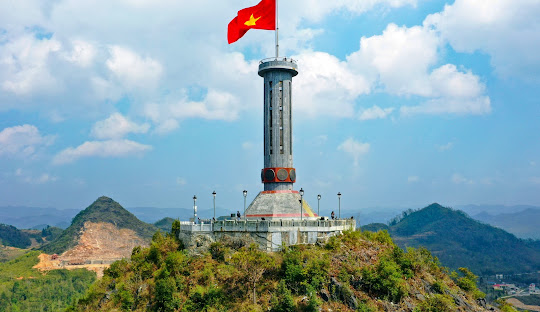
Lũng Cú Flag
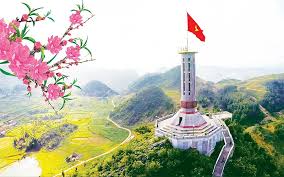
Lũng Cú Flag Tower – A Sacred Symbol of National Sovereignty 🇻🇳
✨ History and Significance of Lũng Cú Flag Tower
Lũng Cú, the northernmost point of Vietnam, has long been a place where our ancestors affirmed territorial sovereignty. According to historical records, during the Lý Dynasty in the 11th century, General Lý Thường Kiệt planted a flag atop Dragon Mountain, declaring: “This is the land of the Vietnamese!” 🇻🇳
During the Tây Sơn era, Emperor Quang Trung recognized the strategic importance of Lũng Cú and established a military outpost alongside a bronze drum that echoed the nation’s sacred sovereignty. 🎠💪
- 1887: The French colonialists attempted to cede Lũng Cú to the Qing Dynasty, but the Vietnamese people fiercely resisted, defending the border.
- 1978: The Lũng Cú Border Guard set up a 10-meter wooden flagpole to guard the border and affirm national sovereignty. 🏰
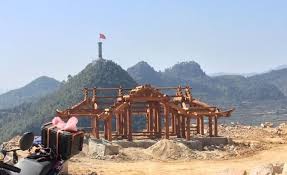
- 2000: The flag tower was reconstructed on a larger scale.
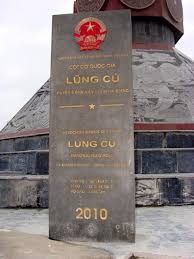
- 2010: The structure was renovated to commemorate the 1,000th anniversary of Thăng Long – Hanoi. 🌟
⭐ Lũng Cú Flag Tower – A Symbol of Unyielding Spirit
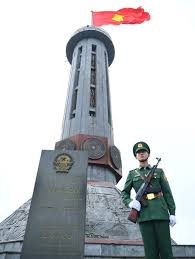
In 1978, the Lũng Cú Border Guard erected the flag tower atop Dragon Mountain. After multiple renovations, the current Lũng Cú Flag Tower was officially built on March 8, 2010, and completed on Vietnam’s National Day, September 2, 2010 🇻🇳.
- Altitude: 1,468 meters above sea level
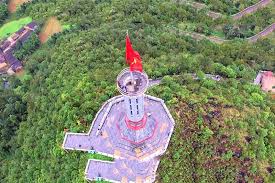
- Height: Nearly 35 meters
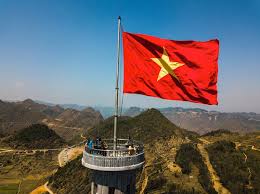
- Flag size: 54 square meters, representing the unity of 54 ethnic groups in Vietnam 💛💖
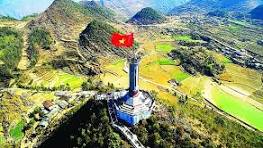


🌇 Impressive Architecture of Lũng Cú Flag Tower
Standing tall like a pen carving national pride into the sky, the flag tower is adorned with eight intricate reliefs depicting Vietnam’s history of nation-building and defense, reflecting the cultural essence of Hà Giang’s ethnic communities. 🌳🌿
Above the reliefs are eight bronze drum faces, symbolizing Vietnamese heritage and reminiscent of the war drums once sounded by Emperor Quang Trung. 🎠
⬆️ The Journey to Conquer Lũng Cú Flag Tower
To reach the top of the flag tower, visitors must climb 839 steps, divided into three sections:
- Stage 1: 425 stone steps from the foot of the mountain to the resting station 🏡
- Stage 2: 279 stone steps from the resting station to the base of the flag tower 🚶♂️
- Stage 3: 135 steel stairs inside the tower leading to the top ♿
From the summit, looking out into the vast landscape, every Vietnamese heart swells with pride as the red flag with a yellow star flutters in the wind 🇻🇳🌇.
📍 Special Features of Lũng Cú
🌍 The Legendary “Dragon Eyes” Lakes
At the foot of Dragon Mountain, there are two natural lakes known as the “Dragon Eyes.” According to legend, these lakes are remnants left by a sacred dragon before ascending to the heavens. They provide a steady water source for local communities throughout the year. 🌱🌧️
🛡 Lũng Cú Border Guard Station
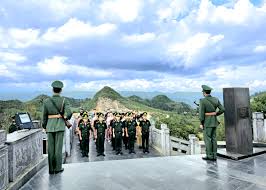
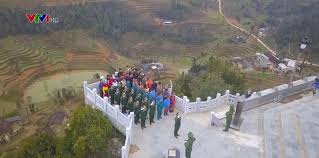
Located about 330 meters from the flag tower, the Lũng Cú Border Guard Station not only protects the border but also ensures that the national flag remains proudly waving. Due to strong winds, the flag is replaced every week or every 10 days 🇻🇳💪.
🕰 A 500-Million-Year-Old Fossil Discovery
On the way up to the flag tower, at the second staircase section, scientists discovered trilobite fossils dating back over 500 million years, providing evidence of the area’s ancient origins. 🧜♀️📝
✨ The Legend Behind the Name “Lũng Cú”
There are several explanations for the name “Lũng Cú”:
- Derived from “Long Cư” (Dragon’s Residence), associated with the legend of the sacred dragon.
- In the H’Mông language, Lũng Cú means “Corn Valley,” reflecting the region’s corn cultivation. 🌽
- Another theory suggests the name originates from a Lô Lô tribal leader who first settled in the area.
✨ Frequently Asked Questions About Lũng Cú Flag Tower
- 🚶 How tall is the flag tower?
- It is 33.15 meters high, standing on a mountain 1,467 meters above sea level.
- 👯 How many steps does it take to reach the flag tower?
- Approximately 839 steps, divided into three stages.
- 🏳️🌈 What is the best time to visit?
- June – July: Lush green fields 🌿
- September: Golden rice harvest season 🌾
- October – November: Enchanting buckwheat flower season 🌸
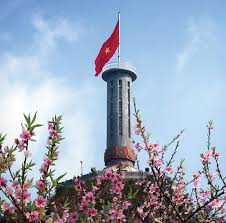
- January – February: Blooming peach and plum blossoms 🌺
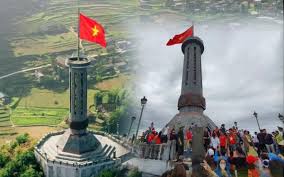






✨ Travel Information for Lũng Cú Flag Tower
- Entrance fee: 45,000 VND/person
✨ Transportation:
From Hanoi to Hà Giang:
- Sleeper bus: Around 300,000 VND/person
- Limousine or private cabin bus: Around 350,000 VND/person
- Private vehicle: Car or motorbike
From Hà Giang to Lũng Cú Flag Tower:
- Rent a car, self-drive, or take a motorbike via Highway QL4C, passing Quản Bạ, Yên Minh, and Đồng Văn.
- Use Google Maps for navigation assistance.
🎭 Lũng Cú Flag Tower – A Must-Visit Sacred Landmark
Located 154 km from Hà Giang City, Lũng Cú Flag Tower is not only a symbol of sovereignty but also an unmissable destination for both domestic and international visitors. Here, you can admire breathtaking landscapes, immerse yourself in Vietnam’s rich history, and feel an overwhelming sense of pride as you watch the national flag flutter in the wind. 💙🇻🇳
Come to Vietnam’s northernmost flag tower to experience national pride, hear the whispers of the borderland wind, and let your heart beat in unison with the red flag bearing a golden star at the summit of Lũng Cú! ✨🇻🇳🚀
Time Travel’s Ha Giang Discovery Tours
Services

Big Loop Tour
Join the Big Loop Tour Ha Giang – Cao Bang – Ba Be to explore majestic mountains, Ban Gioc Waterfall, Ba Be Lake, and the unique culture of Northeast Vietnam. Book your tour now!

Ha Giang Group Tour
Join the Ha Giang Group Tour for an incredible journey through majestic mountain passes, traditional villages, and stunning landscapes. Perfect for friends, families, or solo travelers!

Ha Giang Private Tour
Experience Ha Giang your way with our Private Tour! Explore breathtaking landscapes, mountain passes, and local culture on a fully customized itinerary. Book now for a unique adventure!
Contact us
Welcome to a world of limitless possibilities, where the journey is as exhilarating as the destination, and where every moment is an opportunity to make your mark on the canvas of existence. The only limit is the extent of your imagination.



 time trvel Tour

Leave a comment